


Pico Mountain Climb Guide: ROUTE, DIFFICULTY, EQUIPMENT & TIPS
Climbing Pico Mountain
OUR ADVENTURE DAY
We are pleased to invite you to join us on an unforgettable adventure to the summit of Pico Mountain — the highest peak in Portugal and one of the most iconic experiences in the Azores. This guided climb is ideal for people in good physical condition, even without previous mountaineering experience, as our professional guides ensure safety, support, and pacing throughout the ascent.
The meeting point is at Casa da Montanha (1,200m), where our guides will welcome the group, provide a full safety briefing, check all required equipment, and distribute GPS locators before starting the climb. From here, we begin a guided journey of approximately 7 – 8 hours to reach the summit at 2,351 meters and return.
The official Pico Mountain trail is around 8 km long and crosses volcanic terrain with an average gradient of 30%, offering a challenging but rewarding ascent. The descent follows the same route, with minor variations above 2,000 meters depending on weather and trail conditions.
We start the climb on the western side of Pico Mountain, with an initial section that takes approximately 20 to 30 minutes to reach 1,300 meters. This first part is an important adaptation phase, where all participants should feel comfortable completing the ascent without difficulty.
Any significant change in breathing, fatigue, or loss of balance should be taken seriously, as this section reflects the type of steep volcanic terrain and uneven conditions that will be experienced throughout the following hours of the Pico Mountain climb. It is an early indicator of the physical demands required to safely continue towards the summit.
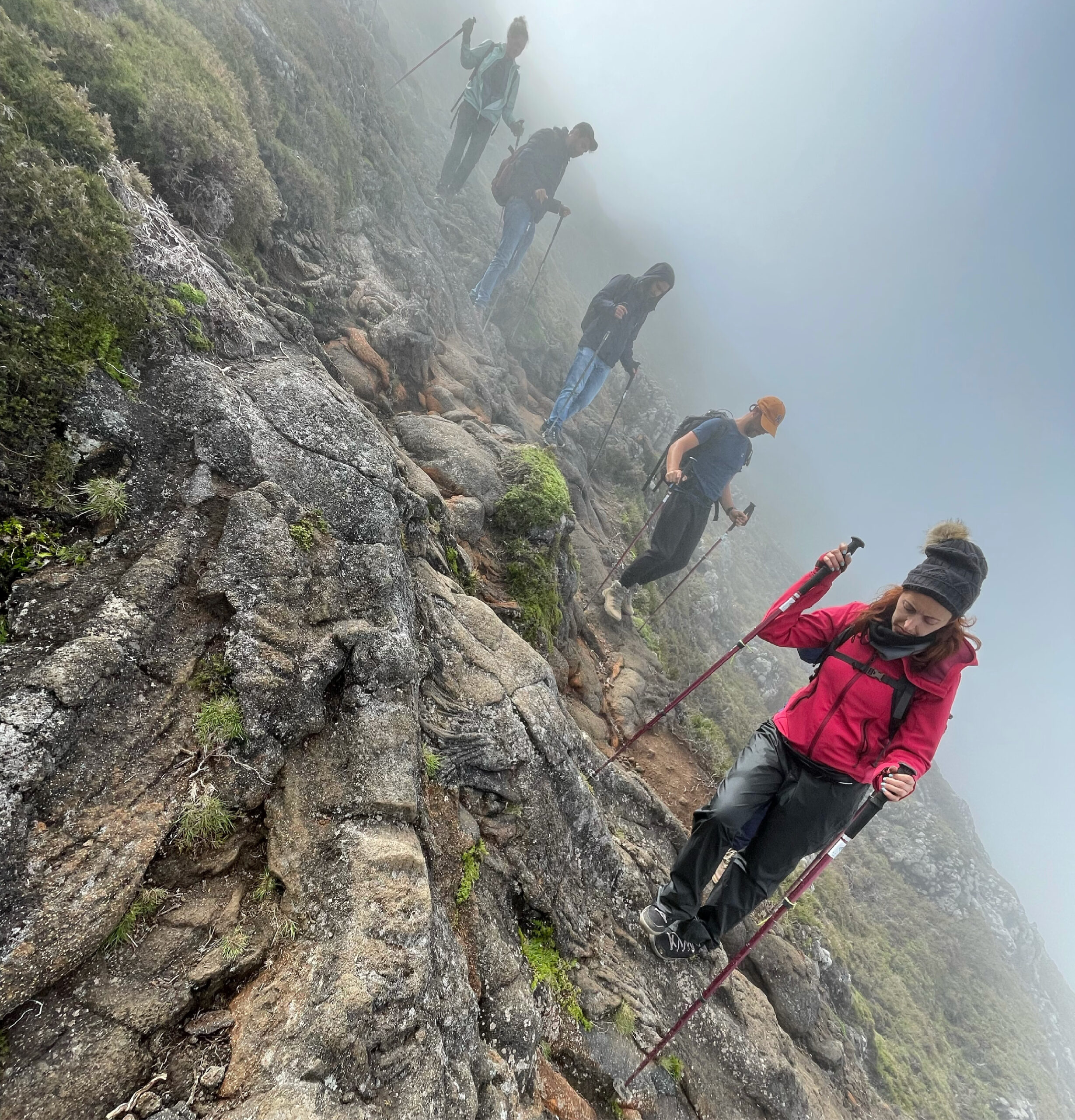
The next stage, between 1300 and 1700 meters, is not very difficult as it is an area where we walk horizontally to the south, but the trail between 1700 and 2000 meters will have very slippery sections, with loose stones and unevenness that will require all our attention.
Reaching 2,200 meters, we will rest in the crater for a few minutes before attacking the summit, the famous “Piquinho”. This lava cone is intimidating at first sight. It is positioned inside the crater and has permanent fumaroles that will not let you forget that you are on top of a volcano.

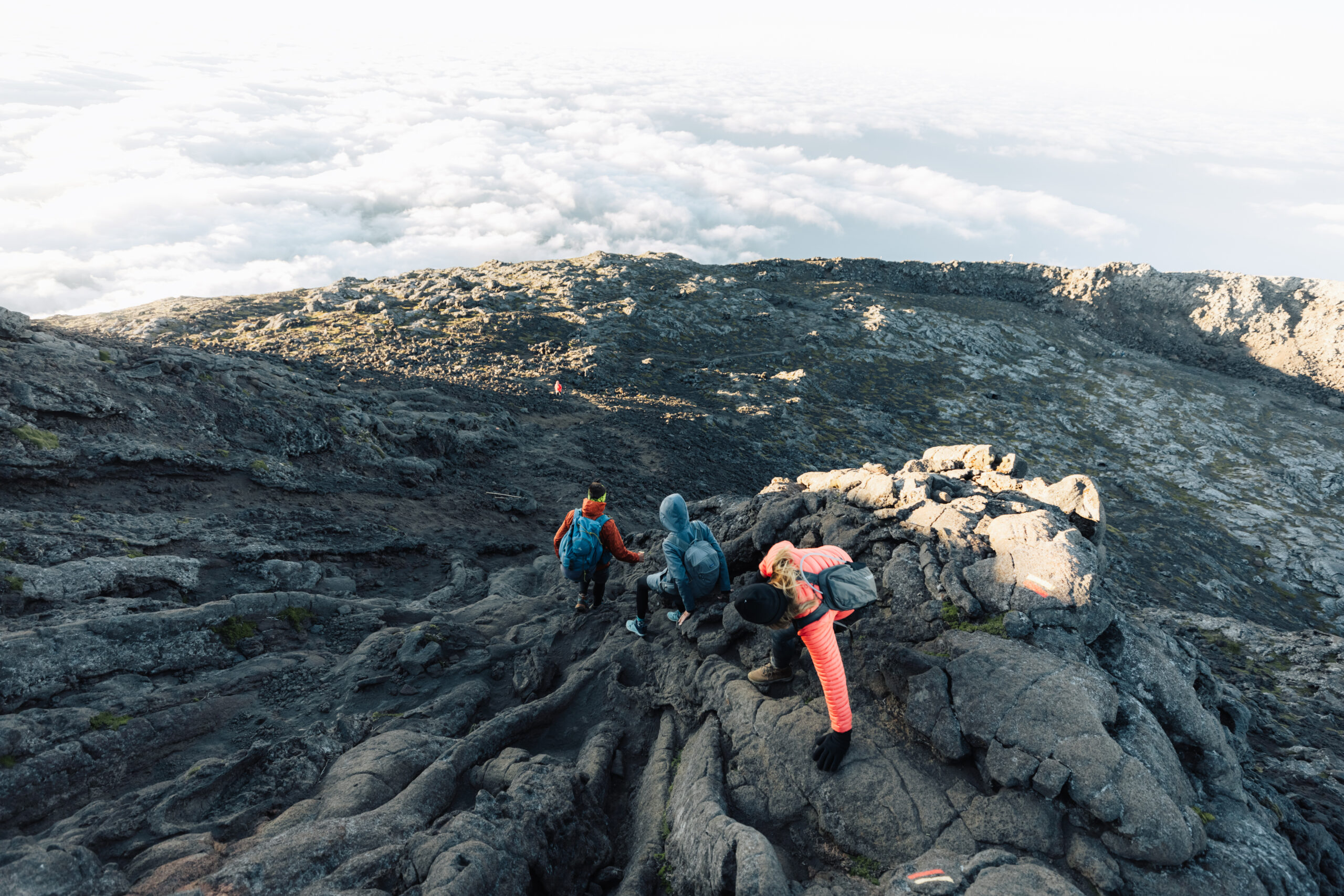
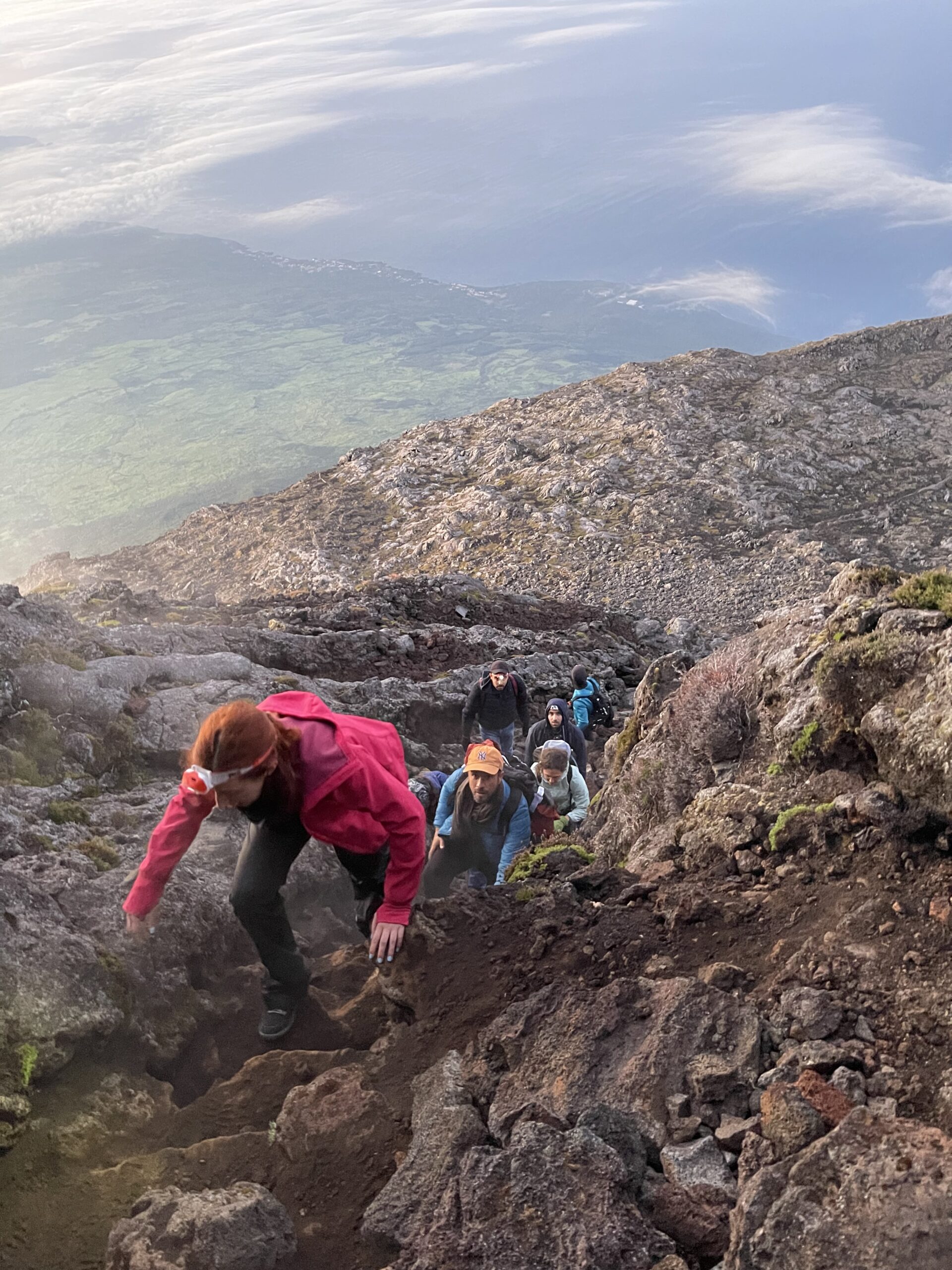
The final ascent to Piquinho takes approximately 30 minutes and differs from the previous sections of the climb. Here, participants will need to use their hands for support due to the steeper incline and loose volcanic rock.
There is no need to worry, as this section is fully guided. Our experienced mountain guides know the terrain in detail and will lead you step by step, ensuring a calm, safe, and controlled progression all the way to the summit area of Pico Mountain.
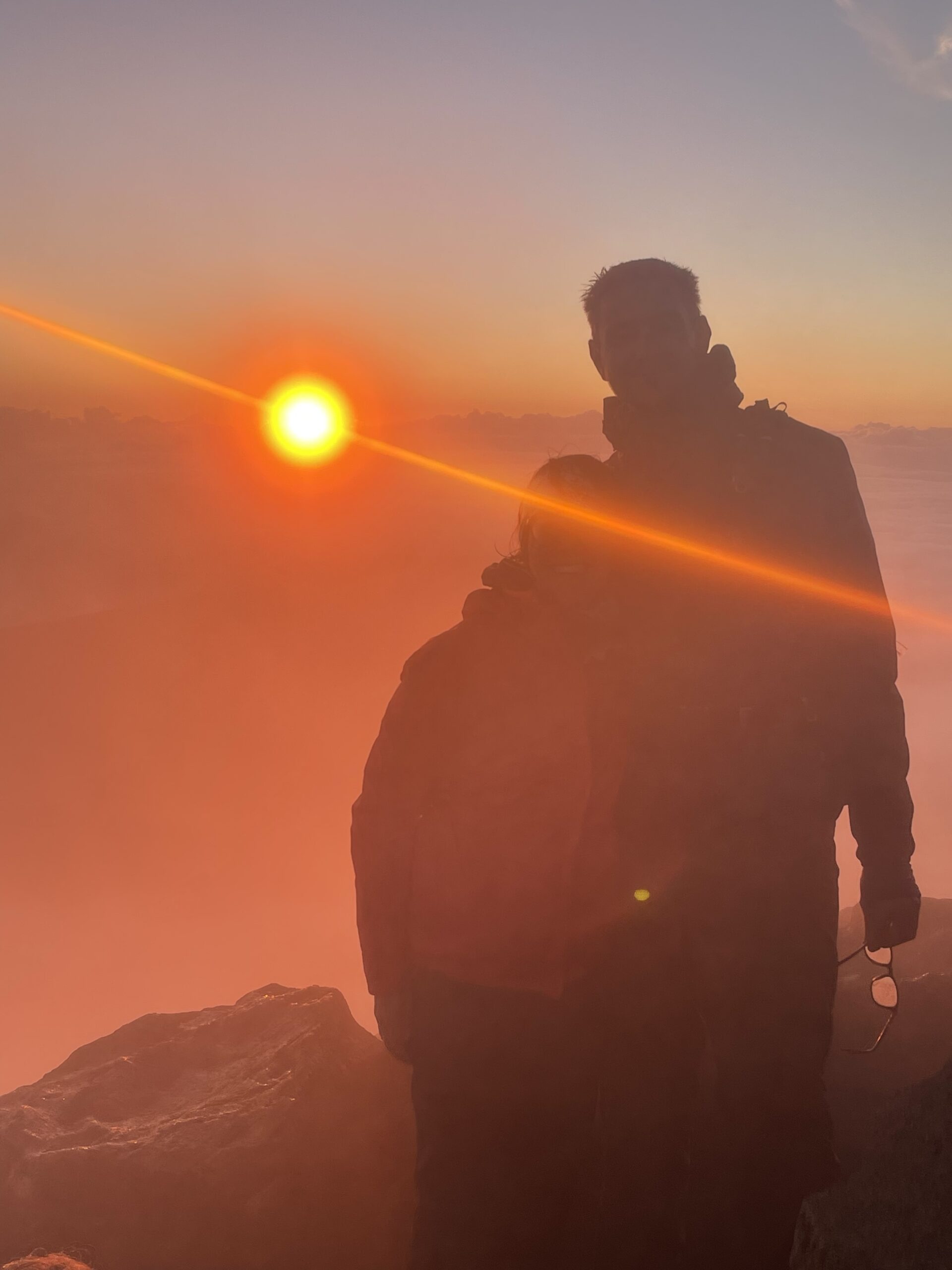
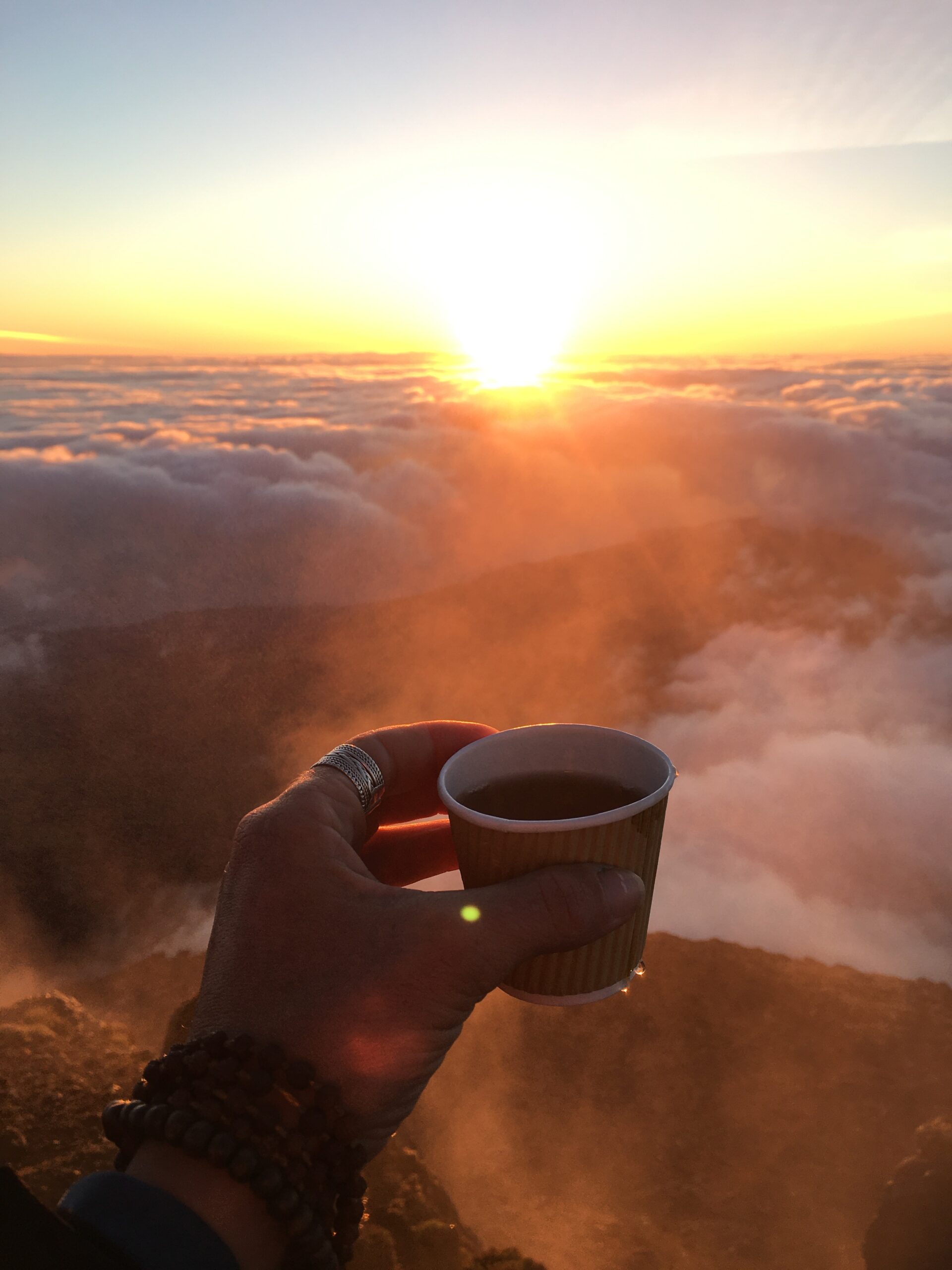
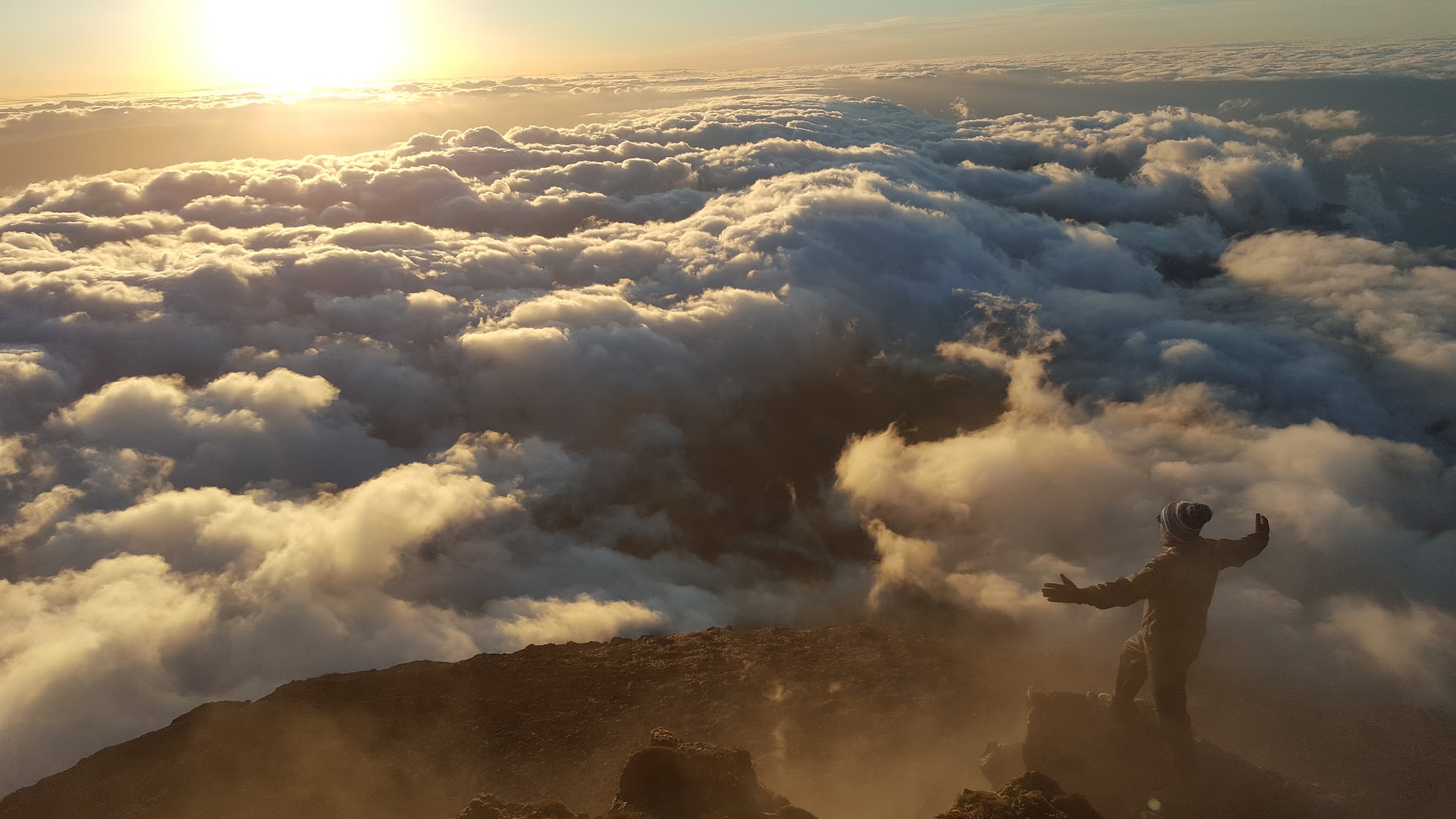
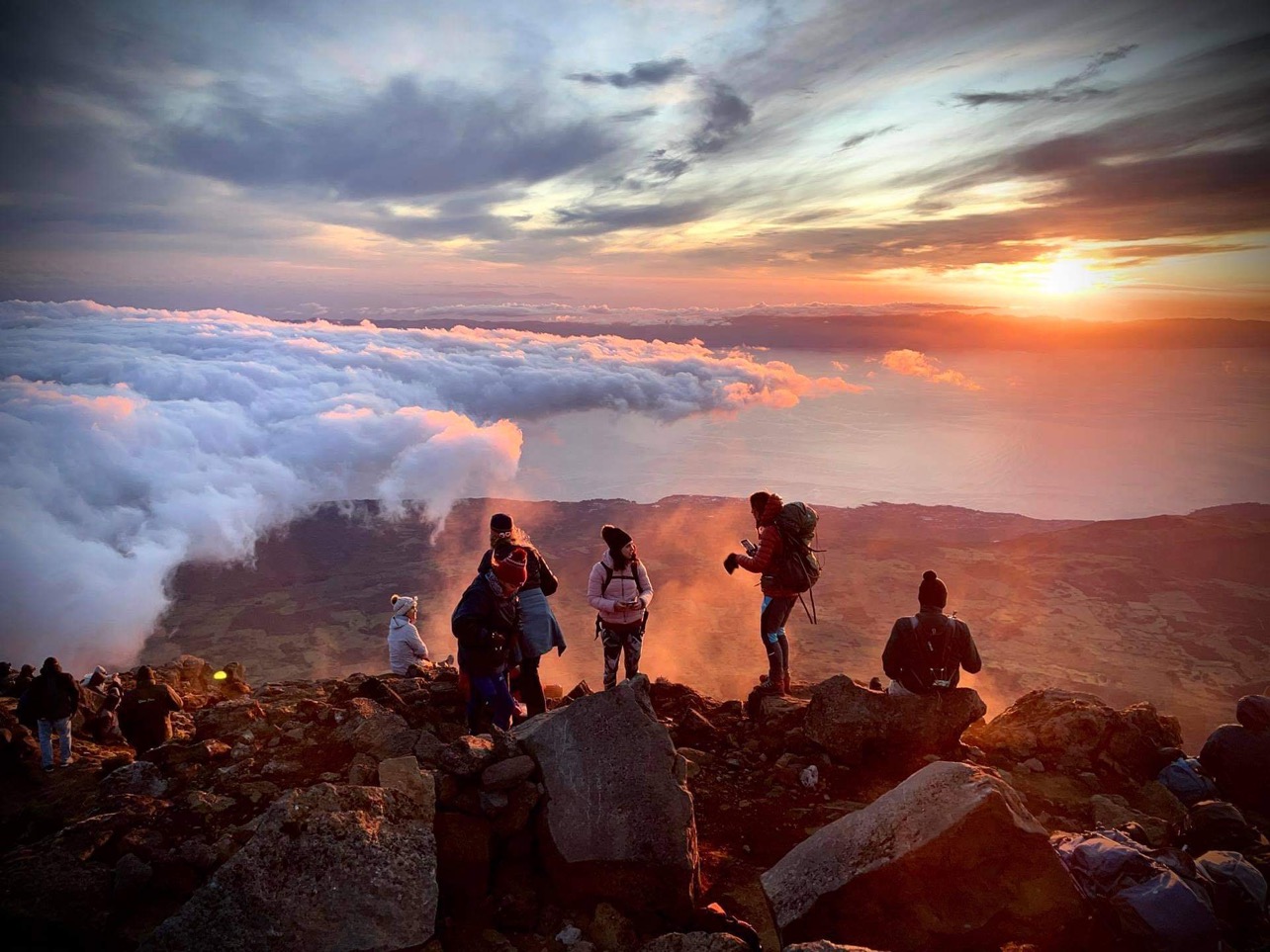
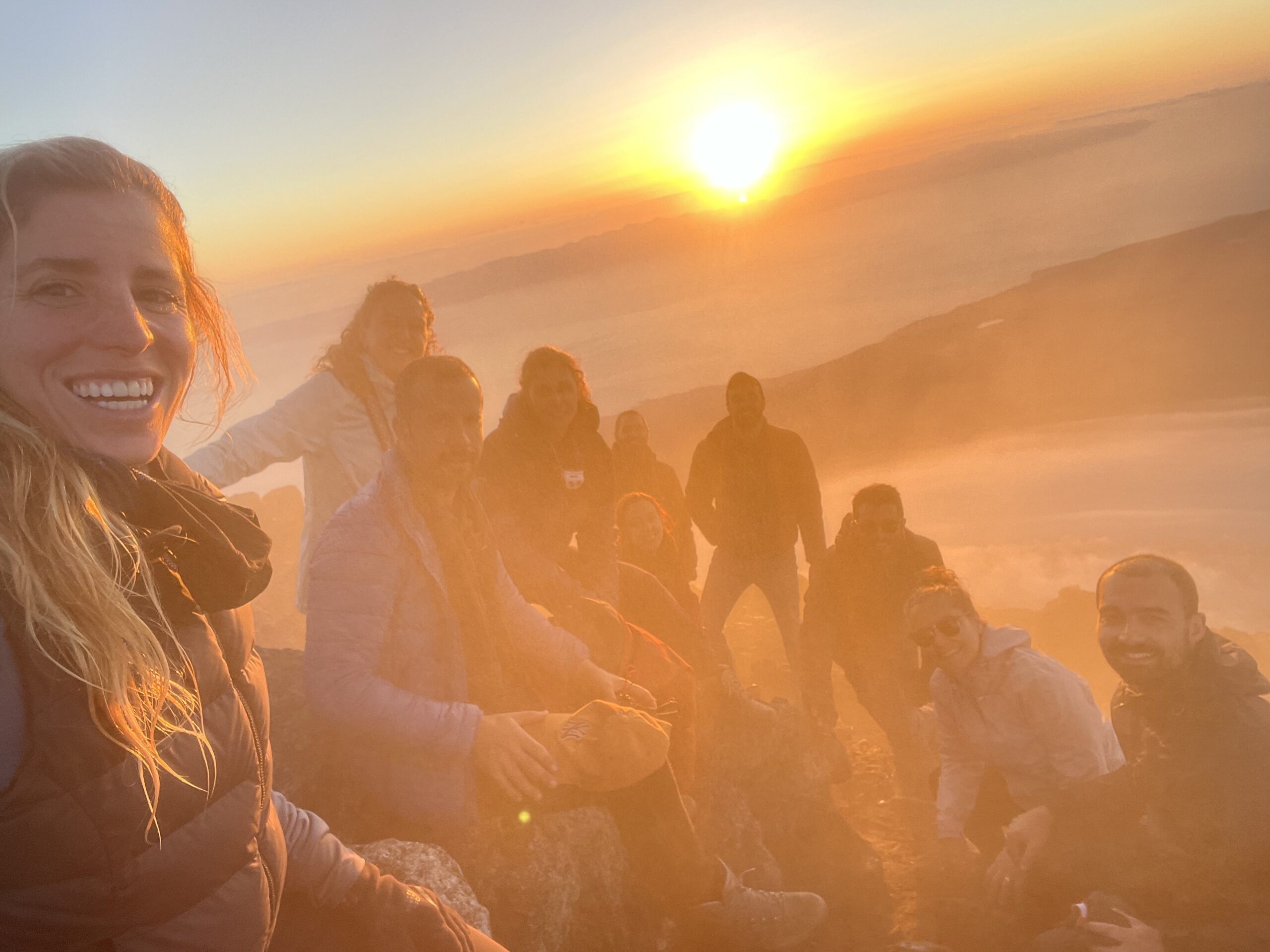
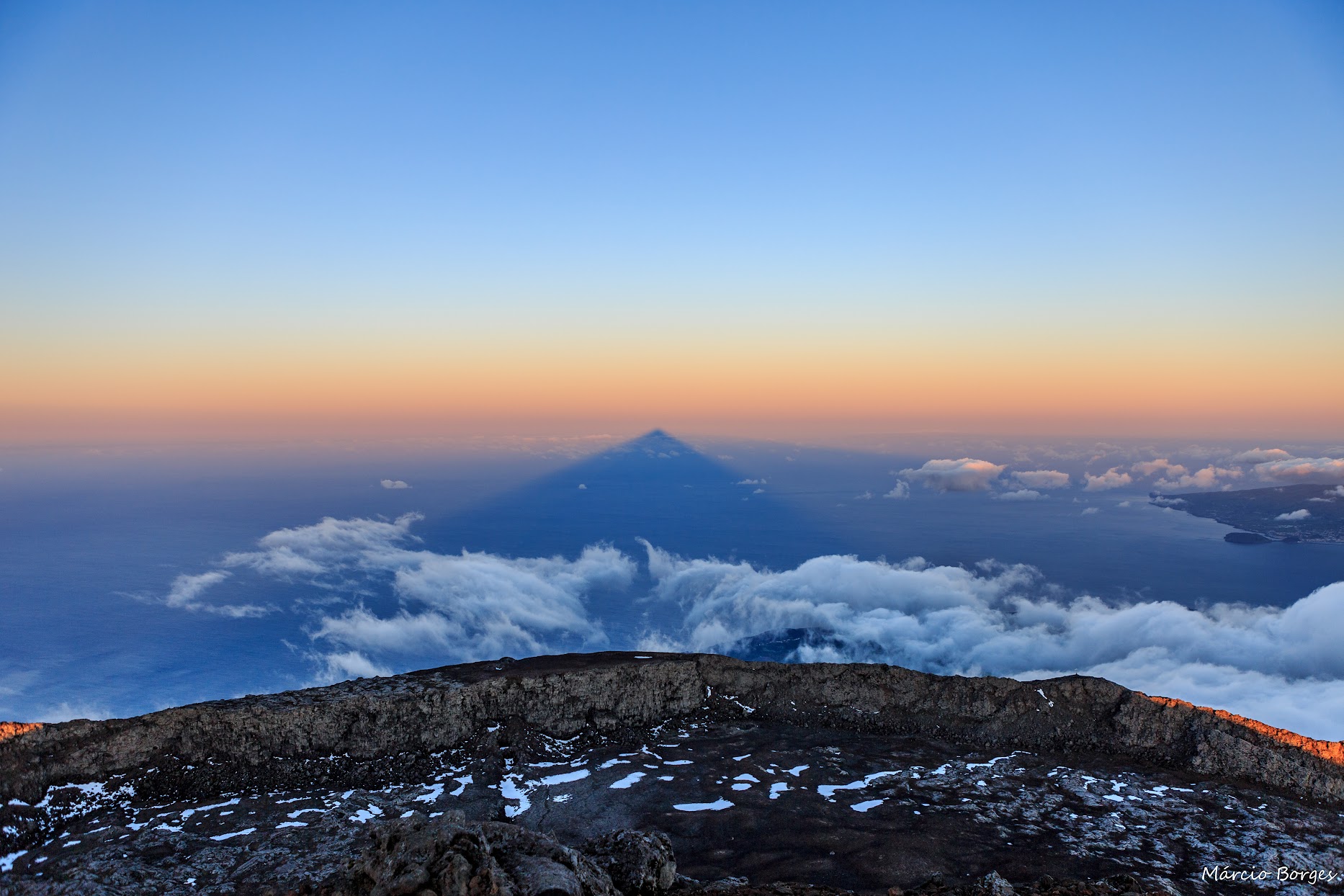
Finally, you reach the summit of Pico Mountain — the highest point in Portugal. At this moment, you will have time to breathe deeply, take in the scenery, rest, and enjoy the achievement, whether by simply contemplating the landscape or capturing unforgettable photos.
This is the moment when everything becomes worth it. On clear days, it is possible to see up to five islands of the Central Group of the Azores: Faial, São Jorge, Graciosa, Terceira, and of course Pico Island itself.
After a well-deserved break at the summit, we begin the descent. Although this is often the most challenging part mentally for participants, we ensure it is done safely and in control, using trekking poles and maintaining focus throughout.
The descent is more continuous, with fewer stops to keep the muscles engaged and maintain rhythm. The terrain remains steep and demanding, and you will feel the effort in your legs in the days that follow — especially on stairs, as a natural reminder of the climb.
Back at Casa da Montanha, your starting point, you will finish the experience with a strong sense of achievement, knowing you have completed one of the most iconic guided climbs in the Azores — and often discovered you are capable of far more than you imagined.
If you feel ready for this adventure… let’s go — Go Climb!
⚠️ Access & Booking Information
Access to the Pico Mountain Nature Reserve is limited to a maximum of 320 people per day and 160 people at the same time. For this reason, we strongly recommend completing your booking with full personal details as early as possible to guarantee your permit.
Please also review our cancellation policy before booking.
Places for Pico Mountain climbs fill up quickly, especially during the peak summer months of July and August.
Climbing Pico Mountain
REQUIRED EQUIPMENT
Equipment is one of the fundamental factors for a safe activity and therefore participants may be denied access to the mountain if they do not have the mandatory items (marked below with * ).
The weather conditions on Pico Mountain are very unstable and the trail is long, so consider protection against heat, solar radiation, cold and rain, regardless of the climbing option or time of year .
NECESSARY ITEMS ALWAYS
- Mountain Boots or Trekking shoes*
- Dryfast light T-shirt
- Polartec Jacket / warm layer
- Waterproof Jacket
- Trekking pants
- Comfortable socks and underwear
- Sunglasses
- Hat , Bandana and Buff
- Sunscreen
- Backpack

Our customers have a 10% discount at the Yupik Outdoor Store to equip themselves for the climb to Pico Mountain.
ITEMS IN CASE OF UNSTABLE WEATHER
- Waterproof jacket *
- Waterproof pants
- Waterproof backpack cover
- Hat and gloves
- Extra socks
- Change of clothes and shoes for the end of the activity (leave in the car)
SUGGESTED DIET
- Minimum 2 liters of water*
- Isotonic drinks
- 2 or 3 Sandwiches
- Dried fruits
- Chocolate and Fruits
- Boiled eggs
GIVE PREFERENCE
- Long sleeves and pants for sun protection
- Camel Bag
- Materials such as: merino wool, polartech, goretex, polyester
AVOID USING
- Materials such as: jeans, cotton, tight clothing, exposed skin.
- Prohibited: running shoes or other shoes.
- Boots that have never been worn, are old or have been stored for more than 6 months so that the sole does not come loose.
Body and Mind prepared
PHYSICAL CONDITIONING
Climbing Pico Mountain is only recommended for people with an active lifestyle and who include physical activities in their daily routine.
Unlike Mt. Everest, the physical and psychological fitness required to reach the summit of Pico can be achieved in a few months of training and dedication. For this reason, we encourage our less active clients to find a demanding physical activity that they enjoy doing and to train for 3 or 4 months before undertaking the activity.
Suggested activities for 3 times a week training:
Minimum 5km running training
10km indoor or outdoor cycling workouts
Volleyball, football, tennis, gym games, etc.
Important tip: Avoid elevators and escalators and opt for the stairs!
Specific cases as listed below should contact GOclimb in advance in order to find the best option for your climb:
Young people over 60 years old
Children under 10 years of age
Specific physical conditions such as malformation of the lower limbs, recent surgeries, others.
Specific health conditions such as heart disease, diabetes, and other cases.
Consult your doctor before signing up for the activity and be clear with the guide about your physical condition.
Private climbs are usually the best option for people who are unsure whether they are capable of reaching the summit or need to spend more hours than usual. Be respectful of your own body and the rest of the group.
Climbing Pico Mountain
CANCELLATION POLICY
In case of rain on the day of the experience, we will do our best to reschedule your activity. If there are no other dates available, the trail will be replaced by an All-Terrain Tour or Expedition to Unknown Caves.
We would like you to understand that we have stopped accepting another group because the day was already reserved for them.
The amount may also be kept as credit to be used within 1 year or refunded.
RETURNS IN CASE OF WITHDRAWAL:
07 days before the climb – 100% of the amount deposited
05 days before the climb – 50% of the amount deposited
03 days – 01 day before the climb – 30% of the amount deposited
Less than 24 hours before the climb – 00% of the amount deposited


